
MARS EXPLORATION BASE
The project investigates the idea of Utopian Architecture, pushing its context to the extreme and questioning the very notion of habitation in all its preconceptions.
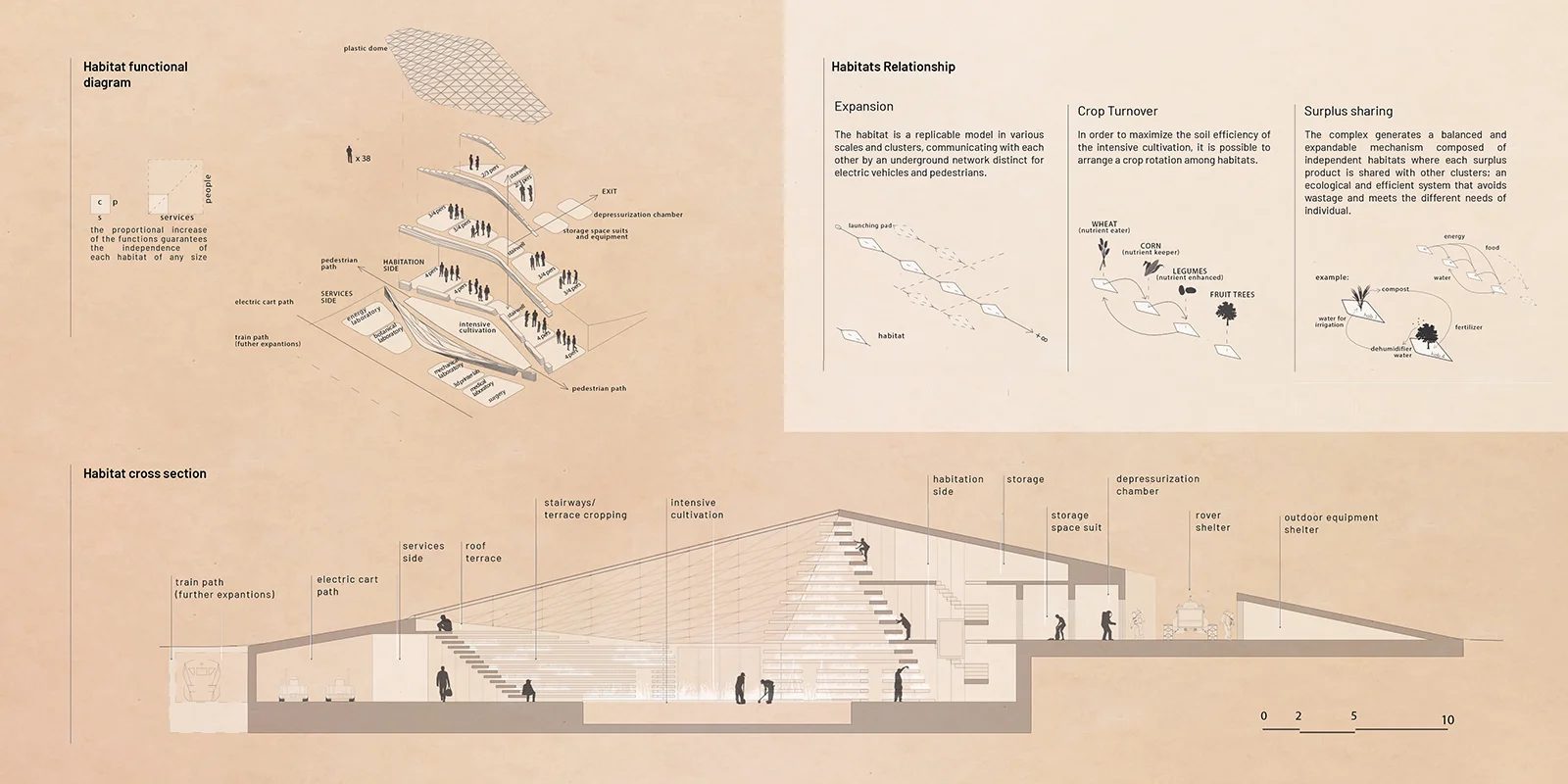
Imagining Martian colonisation as a fresh start on a virgin planet, the proposal establishes from the outset an ecological and economical model: one that respects the new environment, avoids waste, and relies solely on local resources.
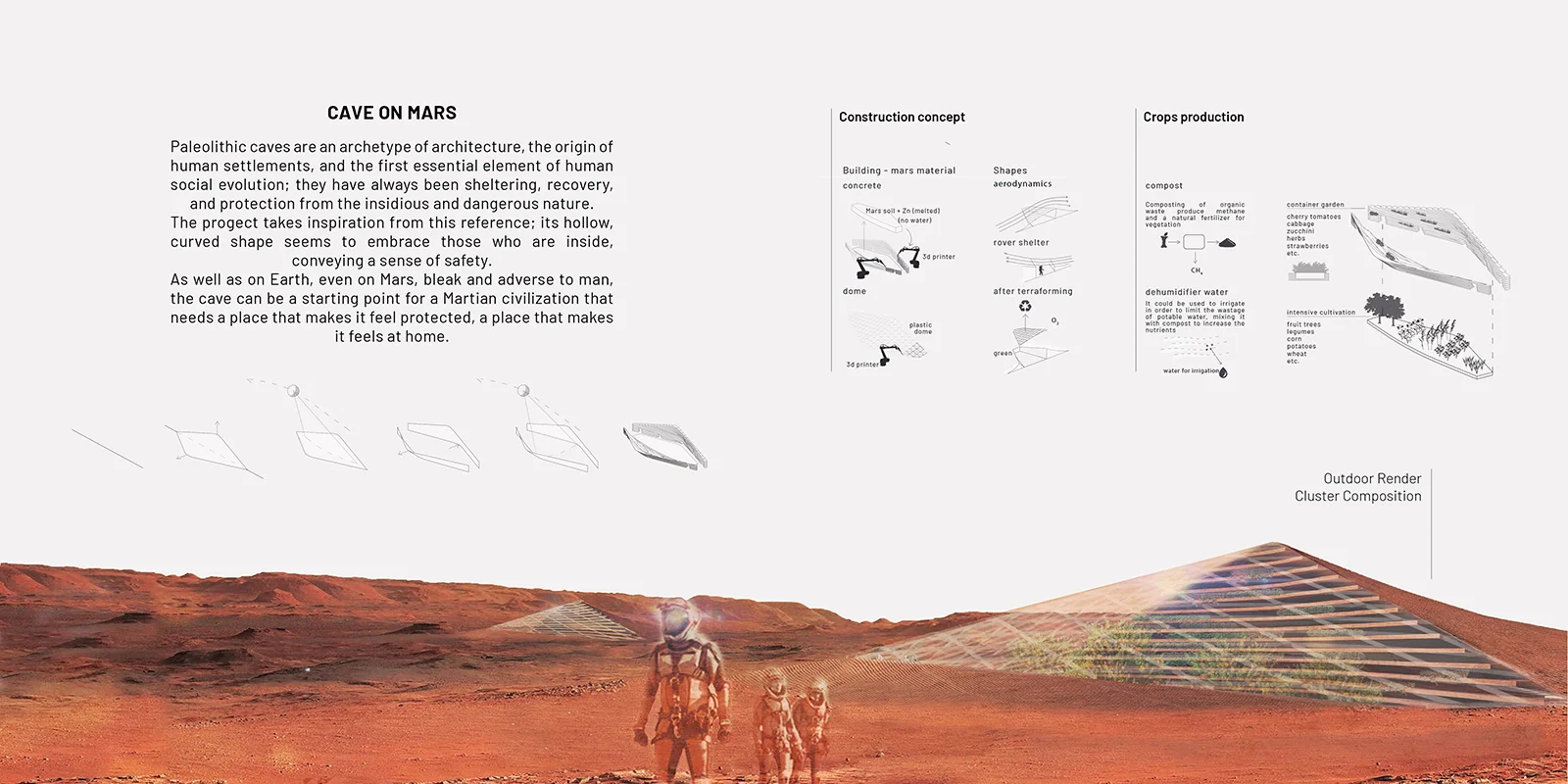
Mars regolith, combined with molten zinc, becomes the new “Martian concrete,” extruded through 3D printing. Other components are produced using plastics derived from methane, all sourced on site. The result is a construction system that is, in essence, entirely made on Mars (R. Zubrin, The Case for Mars, 2011).
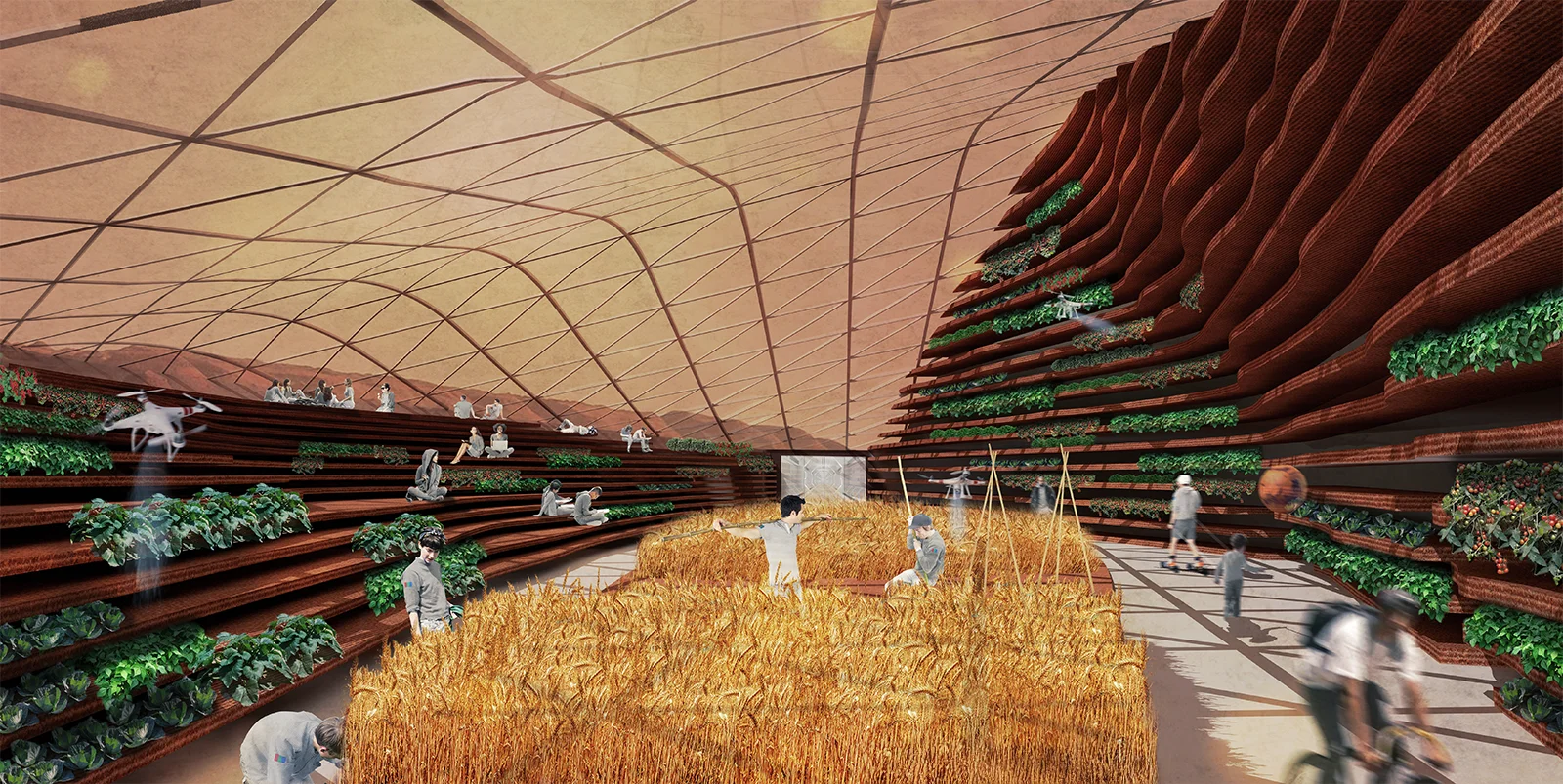
The architecture draws inspiration from the archetype of the cave: a protective, carved space capable of offering shelter from Martian storms.
The central square becomes a key place where sociality and agricultural production merge in a new idea of collective living space.


LOCATION
MARS
STATUS
COMPETITION
YEAR
2016.
TYPE
UTOPIAN ARCHITECTURE
THEMES
LANDSCAPE.
ARCHITECTURE.
LANSCAPE.
URBAN PLANNING.