
COMPACT AIRBNB RETREAT. HISTORIC VILLAGE.
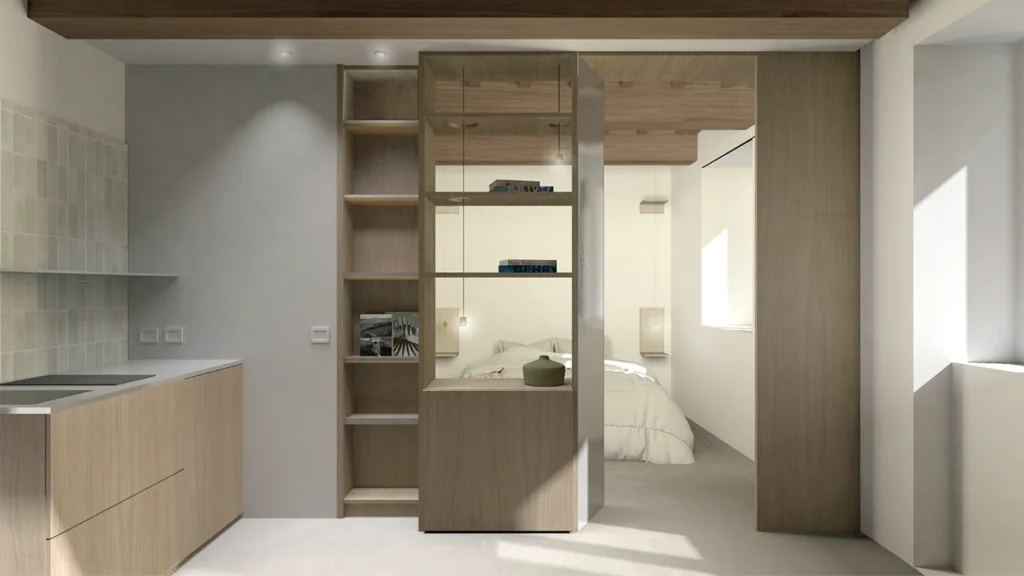
The project involved the renovation of a micro-apartment located in a historic village on the shores of Lake Trasimeno, in Umbria, conceived as a compact Airbnb retreat. The main objective was to maximise the limited available space by designing flexible environments capable of adapting to different needs throughout the day.
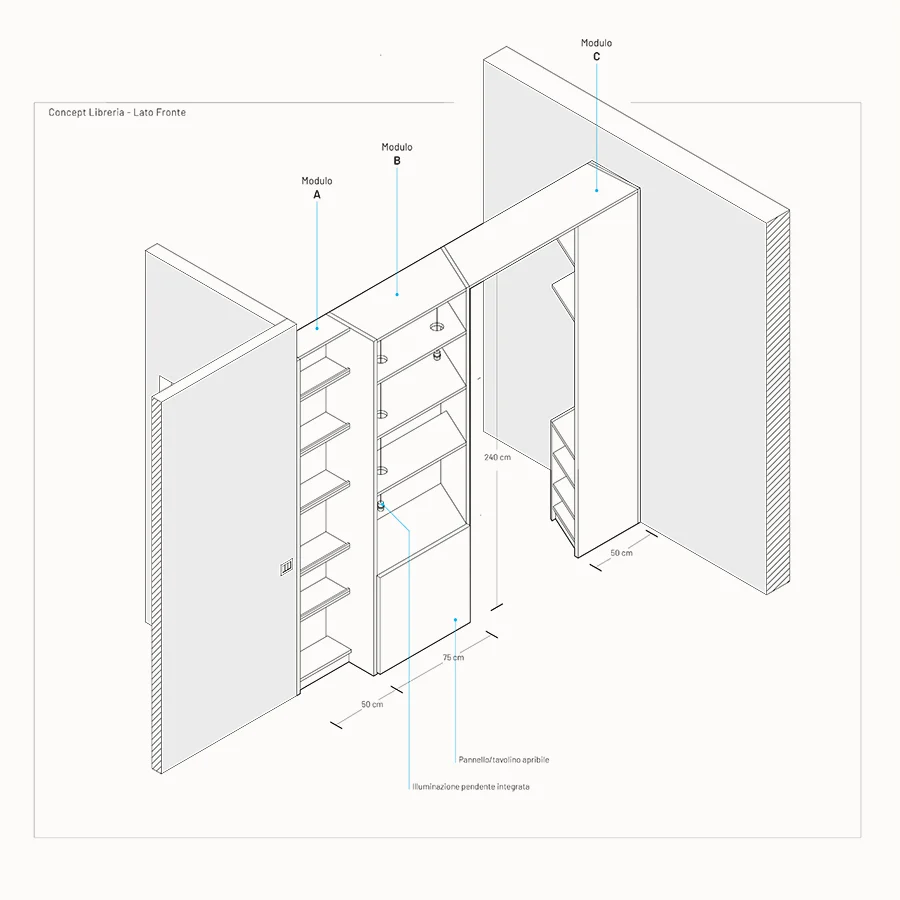
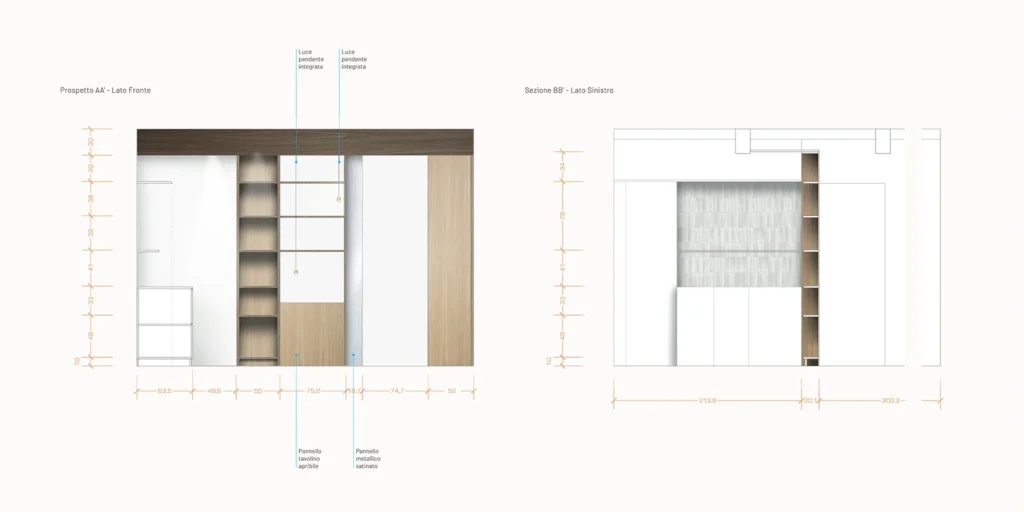
To achieve this, a custom-designed bookshelf was developed as a central architectural element, able to both divide and connect the sleeping area and the small living space. Rather than acting as a solid partition, the bookshelf defines two distinct zones while maintaining visual continuity and allowing natural light to flow through.

On the night side, it integrates a small writing desk and an open wardrobe, while on the living side it incorporates shelving and a foldable table that can be opened when needed. In this way, the element functions as a multifunctional interface: it separates spaces physically, yet connects them through shared functions and permeability.
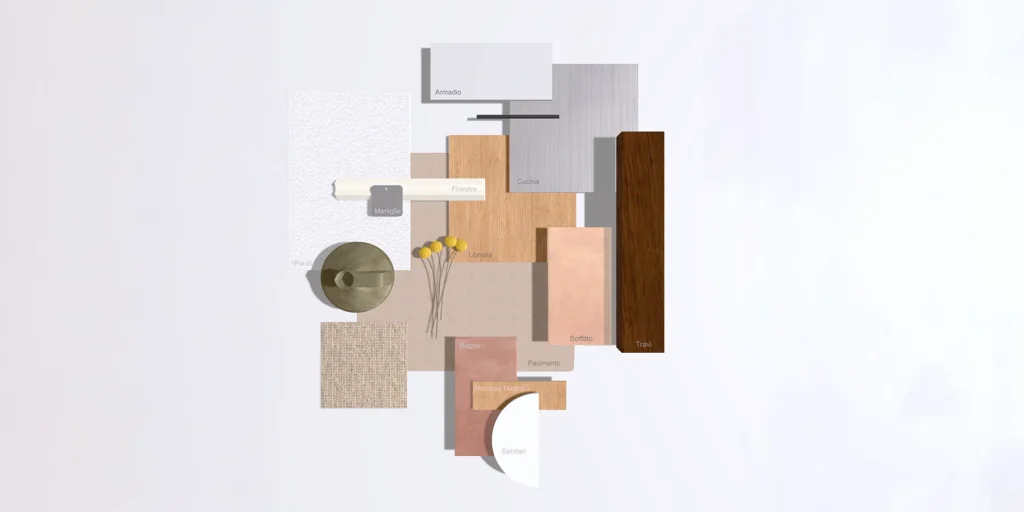
Given the historical character of the village and its surroundings, particular attention was paid to the selection of materials. Finishes and textures were carefully chosen to respect the identity of the place and to create a harmonious dialogue between old and new, ensuring a balanced and context-sensitive intervention.

LOCATION
UMBRIA. ITALY.
STATUS
ONGOING.
YEAR
2025.
CLIENT
PRIVATE OWNER
TYPE
RENOVATION.
THEMES
INTERIOR.
HERITAGE-SENSITIVE DESIGN.
MICRO-ARCHITECTURE